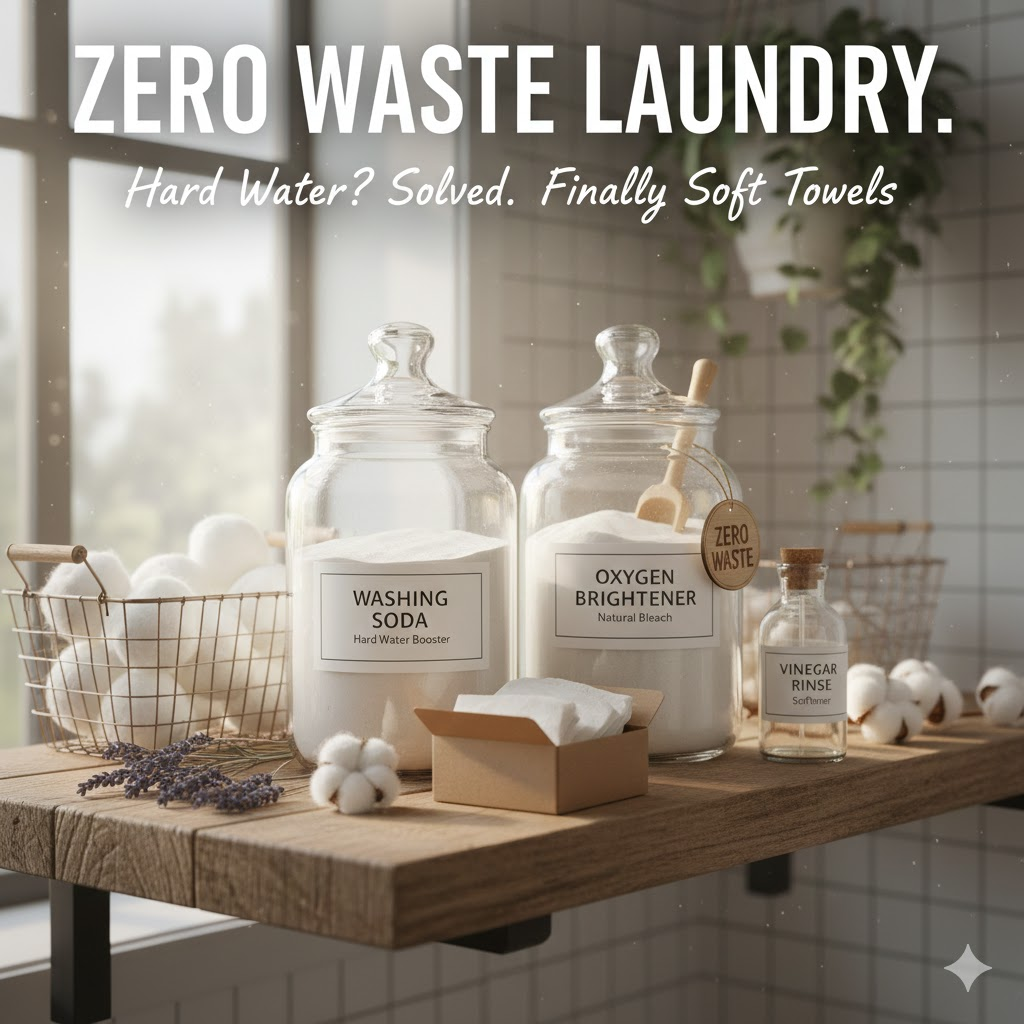
Living in a region with hard water—affecting roughly 85% of households in the USA—is a constant battle against “the gray.” Your whites turn dingy, your towels feel like sandpaper, and your clothes seem to wear out twice as fast. When you try to transition to a zero-waste lifestyle, this struggle intensifies.
Many popular “eco-friendly” DIY recipes (usually based on castile soap) fail miserably in hard water. Instead of cleaning your clothes, the soap reacts with calcium and magnesium to create soap scum, which traps dirt inside the fibers.
To achieve a truly zero-waste laundry routine in a hard-water home, you don’t just need soap; you need a strategy for mineral management. Here is the definitive guide to zero-waste laundry detergents that actually work when your water is working against you.
The Chemistry: Why Hard Water Kills “Natural” Soap
Before we look at the products, we have to understand the science. Hard water contains high concentrations of dissolved minerals, primarily calcium and magnesium.
Traditional soaps (like those made from coconut or olive oil) are “anionic.” When they meet hard water minerals, they bond together to form an insoluble solid—the dreaded “curd.” This curd sticks to your clothes, making them stiff and gray.
To win, you need either synthetic-free detergents (not soaps) or water softeners added to your wash.
1. Best Overall: High-Performance Detergent Sheets
Laundry sheets have revolutionized the zero-waste market. They are lightweight, plastic-free, and highly concentrated.
- Why they work for hard water: The best brands (like Kind Laundry or Earth Breeze) use plant-derived surfactants that are designed to remain effective even in mineral-heavy environments. Unlike soap, these surfactants lower the surface tension of water without bonding to the calcium.
- The Hard Water Hack: If your water is “extra hard,” use 1.5 sheets instead of one. The extra surfactants help keep the minerals in suspension so they wash away instead of redepositing on your fabric.
2. The Powerhouse: Powdered Oxygen Boosters
For those who prefer a traditional feel, concentrated powders in compostable packaging are the gold standard for stain removal.
- Top Pick: Meliora Laundry Powder. It is Made Safe certified and uses a simple, transparent ingredient list.
- Hard Water Strategy: Meliora and similar brands use sodium carbonate (washing soda). Washing soda is a natural water softener. It “ties up” the calcium and magnesium, allowing the soap component to actually clean the clothes.
- Pro Tip: Always add the powder to the drum before the clothes. This gives the washing soda time to soften the water as the machine fills.
3. The Ancient Alternative: Soap Berries (With a Twist)
Soap berries (or soap nuts) are dried fruit shells containing saponin, a natural surfactant.
- The Hard Water Catch: In soft water, soap berries are magic. In hard water, they can struggle.
- The Fix: You must use soap berries with a booster. Adding half a cup of distilled white vinegar to the fabric softener compartment or a tablespoon of baking soda to the drum helps neutralize the minerals, allowing the saponin to foam and clean effectively.
4. DIY Recipe for Hard Water (The Non-Soap Version)
If you insist on making your own, avoid “grated bar soap” recipes. Instead, use this mineral-busting dry blend:
Ingredients:
- 2 Parts Sodium Percarbonate (Oxygen bleach – lifts stains and kills bacteria).
- 2 Parts Sodium Carbonate (Washing Soda – the primary water softener).
- 1 Part Sodium Bicarbonate (Baking Soda – deodorizer).
- Optional: 10 drops of Lemon or Eucalyptus essential oil.
Why this works: This recipe contains no actual “soap” to create scum. It relies on alkaline salts to lift dirt and oxygen to brighten, while the washing soda handles the hard water minerals.
5. Essential Add-Ons for Hard Water Success
Even the best zero-waste detergent needs help if your grains of hardness are in the double digits. Incorporate these three tools:
A. The Vinegar Rinse
Hard water minerals are alkaline. Vinegar is acidic. By adding half a cup of white vinegar to your rinse cycle, you neutralize the mineral deposits that make clothes stiff. This is the ultimate zero-waste fabric softener.
B. Wool Dryer Balls
Hard water makes fibers “crunchy.” Wool dryer balls act as a physical massager, beating the stiffness out of the fabric as it dries. They also reduce drying time by up to 25%, saving energy.
C. Magnesium/Calcium Filters
If you are a homeowner, consider a localized inline filter for your washing machine. These small attachments can catch a significant portion of minerals before they even hit your clothes, making your eco-detergent much more efficient.
6. Common Pitfalls to Avoid
- Cold Water Only: While eco-friendly, cold water makes it harder for zero-waste powders and minerals to dissolve. For whites and heavily soiled loads in hard water, use warm water (around 100°F) to ensure the chemistry can actually happen.
- Overloading: In hard water, you need more space for the minerals to be flushed away. Overloading the machine traps mineral-laden water inside the folds of the clothes.
- Using “Homemade Soap”: We cannot stress this enough—if you have hard water, do not use homemade recipes containing Dr. Bronner’s or grated Fels-Naptha. You will eventually ruin your clothes and potentially your machine with wax-like buildup.
The Environmental ROI
Switching to zero-waste laundry isn’t just about the plastic bottle. Traditional detergents (like Tide or Persil) often contain phosphates or EDTA to handle hard water. While effective, these chemicals cause “eutrophication” in our waterways, leading to algae blooms that kill fish.
By choosing plant-derived sheets or washing soda-based powders, you are choosing ingredients that the earth can actually process. You are protecting your local watershed while finally getting your towels soft again.