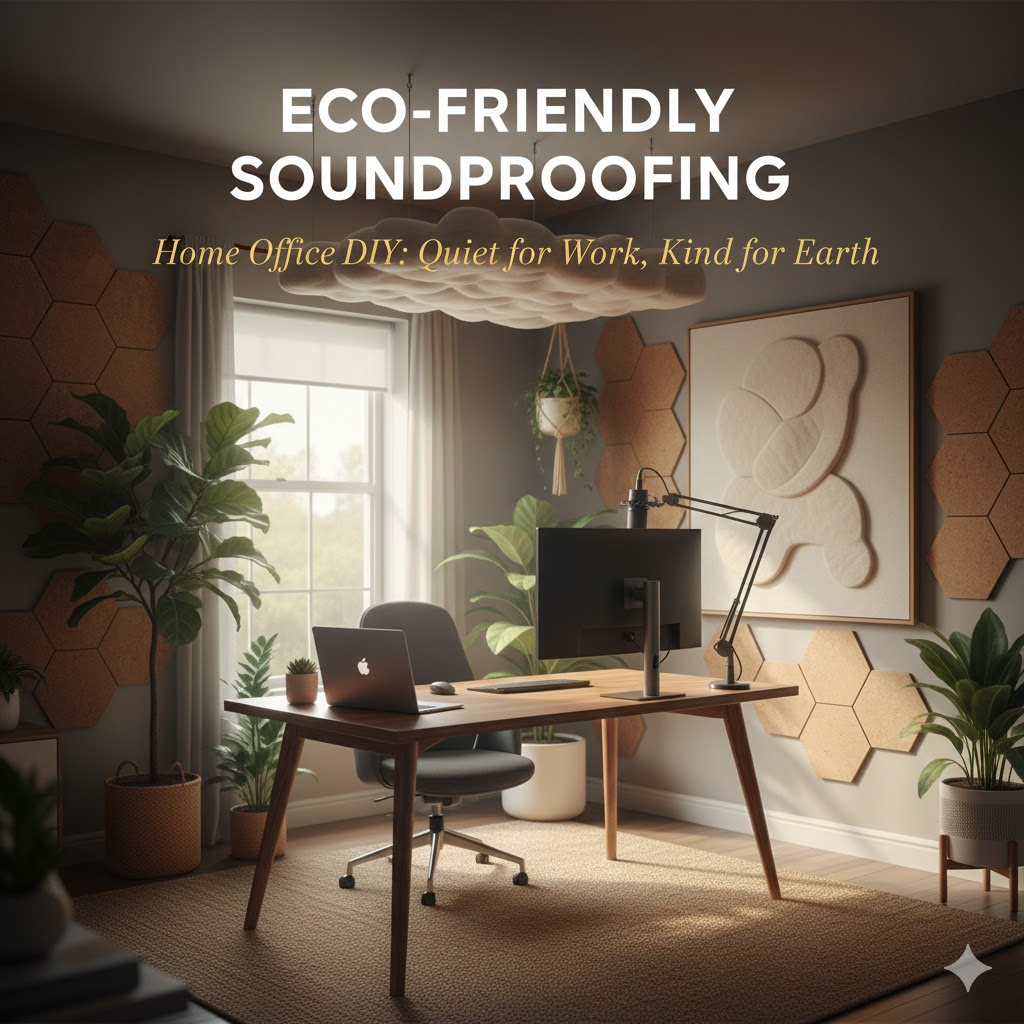
In the modern era of the hybrid workforce, the “home office” has transitioned from a temporary kitchen-table setup to a high-stakes productivity hub. However, there is a recurring nemesis for every professional: acoustic pollution. Whether it’s the neighbor’s leaf blower, the hum of the refrigerator, or the echo of your own voice during a Zoom call, sound is the silent productivity killer.
Traditionally, soundproofing involved heavy vinyls, petroleum-based foams, and fiberglass—materials that are often toxic to produce and impossible to recycle. But as we spend 40+ hours a week in our workspaces, the air quality and sustainability of our soundproofing matter.
Here is how to build a sanctuary of silence using the best eco-friendly, non-toxic soundproofing materials for a DIY home office.
1. The Science of Silence: Absorption vs. Blocking
To soundproof effectively, you must understand the two ways sound behaves:
- Sound Absorption: Dealing with “internal” noise (echoes and reverberation). This makes you sound better on mic.
- Sound Blocking (Decoupling): Stopping “external” noise from entering the room. This requires density and mass.
Eco-friendly materials excel at both, often outperforming their synthetic counterparts because natural fibers have complex, irregular structures that trap sound waves more efficiently.
2. Mycelium Acoustic Panels: The Future is Fungi
Perhaps the most “space-age” eco-material available today is Mycelium—the root structure of mushrooms. Companies are now growing acoustic panels by “feeding” agricultural waste to mycelium in molds.
- Why it’s a winner: It is 100% compostable, fire-resistant, and naturally VOC-free.
- Acoustic Profile: Mycelium panels have a high NRC (Noise Reduction Coefficient), making them perfect for killing that “hollow” room sound.
- DIY Tip: You can buy “Grow-It-Yourself” kits. You essentially “bake” the panels once they reach the desired shape to stop the growth, resulting in a lightweight, velvety-textured tile.
3. Hempcrete and Hemp Batts
Hemp is a carbon-sequestering powerhouse. Hemp wool (batts) is becoming the preferred alternative to itchy, toxic fiberglass insulation.
- Why it’s a winner: Hemp fibers are incredibly dense. Unlike fiberglass, you don’t need a hazmat suit to install it. It’s breathable, meaning it won’t trap moisture and lead to mold in your walls.
- DIY Application: If you are doing a “to-the-studs” renovation of your office, stuffing the wall cavities with hemp batts provides superior sound decoupling from the rest of the house.
4. Recycled Cork Wall Tiles
Cork is harvested from the bark of the Cork Oak tree without killing the tree, making it one of the most renewable resources on the planet.
- Why it’s a winner: Cork is made of millions of tiny air-filled chambers. It acts as a natural “shock absorber” for sound.
- The Aesthetic: It adds a warm, biophilic texture to an office.
- DIY Tip: Look for high-density cork tiles (at least 10mm-12mm thick). Standard thin cork bulletin boards won’t do much; you need thickness to absorb lower-frequency vibrations.
5. Sheep’s Wool Insulation
Wool isn’t just for sweaters. As an acoustic insulator, sheep’s wool is remarkably effective at absorbing mid-to-high frequency sounds—the exact frequencies of human speech.
- Why it’s a winner: Wool actually cleans the air. It can absorb harmful chemicals like formaldehyde and sulfur dioxide.
- DIY Application: You can create “Acoustic Clouds”—fabric-wrapped frames filled with wool insulation—and hang them from the ceiling. This prevents sound from bouncing off the floor and ceiling.
6. Step-by-Step: Building Your Own “Earth-Friendly” Acoustic Panels
If you want a high-end look without the $500 price tag of professional panels, follow this DIY guide using sustainable materials:
Tools & Materials:
- Frames: Reclaimed wood or FSC-certified pine.
- Core: Hemp wool or sheep’s wool batts.
- Fabric: Organic jute, hemp burlap, or recycled cotton (avoid polyester/plastic-based fabrics as they reflect sound).
- Backing: Recycled cardboard.
Construction:
- Build the Frame: Create a simple 2’x4′ wooden rectangle.
- Insert the Core: Snugly fit your hemp or sheep’s wool into the frame. Do not compress it too tightly; air gaps within the fibers are what trap the sound.
- Wrap and Staple: Stretch your jute or organic cotton over the front and staple it to the back.
- Air Gap Mounting: When hanging these on your wall, leave a 1-inch gap between the panel and the wall. This “air gap” allows the panel to catch sound waves as they bounce back off the wall, effectively doubling the absorption.
7. Addressing the “Hidden” Leaks (Eco-Style)
Even the best panels won’t help if your door has a half-inch gap at the bottom.
- The Door Seal: Instead of rubber or plastic sweeps, use a heavy wool felt strip. Felt is a classic industrial sound dampener that is biodegradable.
- The Windows: As discussed in previous guides, heavy wool or velvet drapes are your best eco-friend here. They act as a massive “acoustic sponge” for outside traffic noise.
8. The “Green” Office ROI
Investing in eco-friendly soundproofing provides a triple return on investment:
- Mental Health: Reducing noise stress lowers cortisol levels.
- Audio Quality: Your clients will notice the professional, “studio-dry” sound of your voice.
- Property Value: Sustainable home improvements are a high-selling point in the current USA real estate market.
Summary Table: Eco-Material Comparison
| Material | Primary Use | Eco-Factor | Skill Level |
| Mycelium | Wall Tiles / Echo | 100% Compostable | Medium (DIY Kits) |
| Hemp Batts | In-wall Blocking | Carbon Negative | High (Renovation) |
| Cork Tiles | Surface Treatment | Renewable Bark | Easy (Peel & Stick) |
| Sheep’s Wool | Ceiling Clouds | Air-Purifying | Medium (Framing) |
Final Thoughts
A home office should be a place of focus, not a source of chemical off-gassing or noise-induced headaches. By choosing mycelium, hemp, wool, and cork, you are building a workspace that respects your ears and the planet. Silence is golden, but sustainable silence is better.