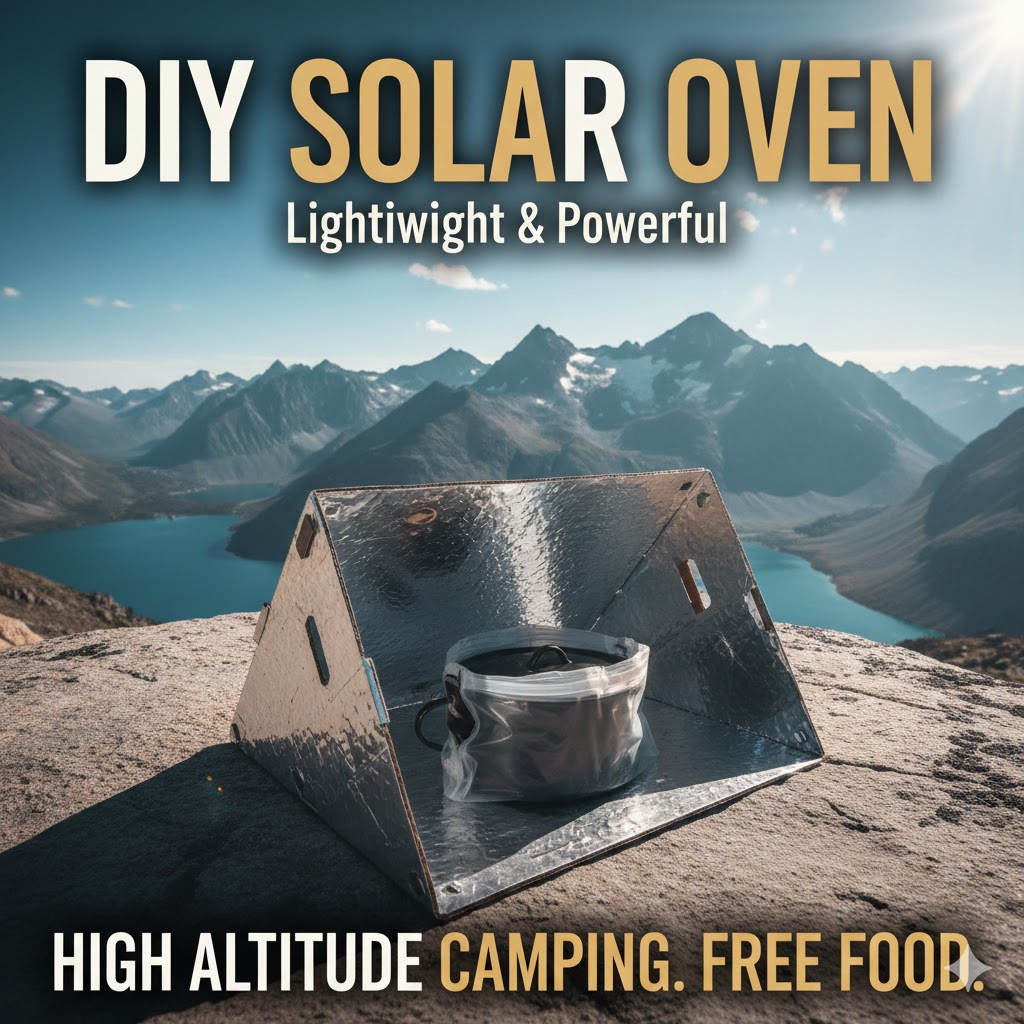
There’s a unique magic to high-altitude camping. The crisp air, the vast vistas, the intense sun… and the often brutal cold that makes cooking a real challenge. Propane canisters dwindle quickly in thin air, and firewood can be scarce or forbidden. This is where a DIY solar oven becomes your secret weapon, turning the very conditions that make cooking difficult into your greatest asset.
Forget bulky, expensive commercial units. Building your own solar oven for high-altitude use isn’t just a fun project; it’s about engineering a lightweight, efficient cooking tool tailored to the extreme conditions above the tree line. Here’s how to do it.
Why High Altitude Demands a Different Solar Oven
At sea level, solar ovens work well enough with basic designs. But at 8,000 feet and above, you need to think smarter:
- More Intense UV/IR: The thinner atmosphere means less filtration. The sun’s energy is more direct and powerful. This is a huge advantage!
- Lower Ambient Air Temps: Even with intense sun, the surrounding air is colder, and winds are stronger. Your oven needs superior insulation to trap that heat.
- Lower Boiling Point: Water boils at a lower temperature at altitude (e.g., around 200°F at 10,000 ft vs. 212°F at sea level). This is a double-edged sword: faster boiling for some things, but slower, longer cooking for others. Your oven must reach and sustain these lower cooking temps effectively.
- Weight & Portability: Every ounce counts in your pack. Your DIY oven must be lightweight and ideally collapsible.
The Fundamental Principles: Capture, Concentrate, Contain
A solar oven works on three basic principles:
- Capture: A dark cooking pot absorbs sunlight and converts it to heat.
- Concentrate: Reflective surfaces (like foil or mylar) direct more sunlight onto the pot.
- Contain: An insulated box and a clear cover (like glass or polycarbonate) trap the heat and prevent it from escaping.
For high altitude, we’ll optimize each of these.
Materials You’ll Need (Focusing on Lightweight & Efficiency):
- The Box: Lightweight cardboard (double-walled is ideal), or for a more durable option, a thin rigid foam insulation board (like XPS foam, often used in construction).
- Insulation: Crumpled newspaper, wool scraps, or even dried leaves/grass (if available on site) for temporary insulation. For a more permanent build, use thin foam sheets or bubble wrap.
- Reflectors: Mylar emergency blankets (very lightweight and effective), heavy-duty aluminum foil, or a reflective car sunshade.
- Cooking Chamber: A small, dark-colored cooking pot with a lid (preferably dark enamel or cast iron).
- Transparent Cover: An oven roasting bag (the large turkey size works well), a clear piece of polycarbonate sheeting (plexiglass), or even a sturdy piece of Mylar stretched taut. Avoid actual glass due to weight and fragility.
- Adhesive: Heavy-duty aluminum tape (duct tape works but can melt/leave residue) or strong spray adhesive.
- Tools: Scissors, utility knife, ruler, marker.
Step-by-Step DIY High-Altitude Solar Oven Construction:
Phase 1: The Inner Cooking Chamber (The “Hot Box”)
- Cut the Base: Take your cardboard or foam board. Cut a square or rectangular base, slightly larger than your darkest cooking pot.
- Build the Walls: Cut four strips of your chosen material (cardboard/foam) to form the walls of your inner box. These should be 4-6 inches high. Tape them securely to the base, forming an open-top box.
- Reflect the Inside: Line the entire inside of this box (base and walls) with your chosen reflective material (Mylar or foil), shiny side in. Smooth it out as much as possible, using aluminum tape for seams.
Phase 2: The Outer Insulated Box
- Cut the Outer Base: Cut another base from cardboard or foam board, 2-3 inches larger than your inner “hot box” on all sides.
- Build Outer Walls: Cut four taller strips (6-8 inches high) to form the outer walls. Tape these to the outer base, creating a larger box around your inner box.
- Insulate the Gap: This is crucial for high altitude. Place your crumpled newspaper, wool scraps, or foam pieces into the gap between the inner hot box and the outer box. Pack it in firmly but don’t crush the inner box. This air-trapping layer is your primary defense against ambient cold.
Phase 3: The Reflective Lid/Flaps
- Create a Lid/Frame: Cut a piece of cardboard or foam board the same size as your outer box. This will be the frame for your clear cover.
- Attach Reflective Flaps: Cut four large flaps (these will be your sun concentrators) from your cardboard/foam. These should be able to fold up at an angle. Cover one side of each flap with Mylar or foil.
- Hinge the Flaps: Tape these flaps to the edges of your lid/frame. When set up, they should angle inwards, directing maximum sunlight onto your clear cover. You can use string or small sticks to prop them at the optimal angle.
Phase 4: The Transparent Cover
- Cut the Window: Cut a square or rectangular opening in your lid/frame, slightly smaller than your inner hot box.
- Attach Clear Material: Securely tape your clear oven bag, polycarbonate sheet, or stretched Mylar over this opening from the underside of the lid. Ensure it’s airtight. This creates your “greenhouse effect.”
Using Your High-Altitude Solar Oven:
- Location, Location, Location: Find a spot with direct, uninterrupted sunlight for hours. Angle your oven directly at the sun.
- Dark Pot is Key: Place your dark cooking pot (with lid) inside the inner hot box. A dark pot absorbs the most solar radiation.
- Angle for Max Sun: Prop up your reflective flaps. Adjust them every 30-60 minutes to track the sun. A small stick or string can help maintain the angle.
- Be Patient (But Not Too Patient): Solar cooking is slower than conventional cooking. Expect 2-4 hours for most meals. However, at high altitude with intense sun, it can often cook faster than you’d expect once it gets going.
High-Altitude Cooking Tips:
- Small Portions: Cook smaller, thinner portions. They heat up faster.
- Legumes & Grains: Dried beans and grains (rice, quinoa) work incredibly well in solar ovens at altitude. They don’t need a hard boil, just sustained heat.
- Rehydrate Dried Meals: Fantastic for rehydrating freeze-dried camping meals without burning precious fuel.
- Keep Lid On: Every time you open the oven, you lose precious heat. Resist the urge to peek!
Troubleshooting & Optimization:
- Not Hot Enough? Check your angle to the sun. Add more insulation around the pot. Ensure your transparent cover is sealed tightly.
- Windy Conditions? Anchor your oven with rocks. Wind is your enemy; it strips away heat. A windscreen (even a backpack) can make a huge difference.
- Condensation on Cover? A small amount is normal. Too much means your food might be too watery or the internal temperature isn’t high enough to steam it away.
- Collapsible Design: For backpackers, build the inner and outer boxes to nest, and use separate reflector panels that can fold. Mylar emergency blankets are great because they fold tiny.
The Reward: A Hot Meal, No Fuel, Just Sun
There’s an immense satisfaction in pulling a warm, rehydrated meal or perfectly cooked rice from your homemade solar oven, high up on a mountain where every other camper is shivering over a dwindling fuel supply. It’s a testament to ingenuity, sustainability, and harnessing the raw power of nature.
So, next time you’re planning that epic high-altitude adventure, skip the extra fuel canisters and pack the materials for your DIY solar oven. Your stomach, your wallet, and the pristine wilderness will thank you.