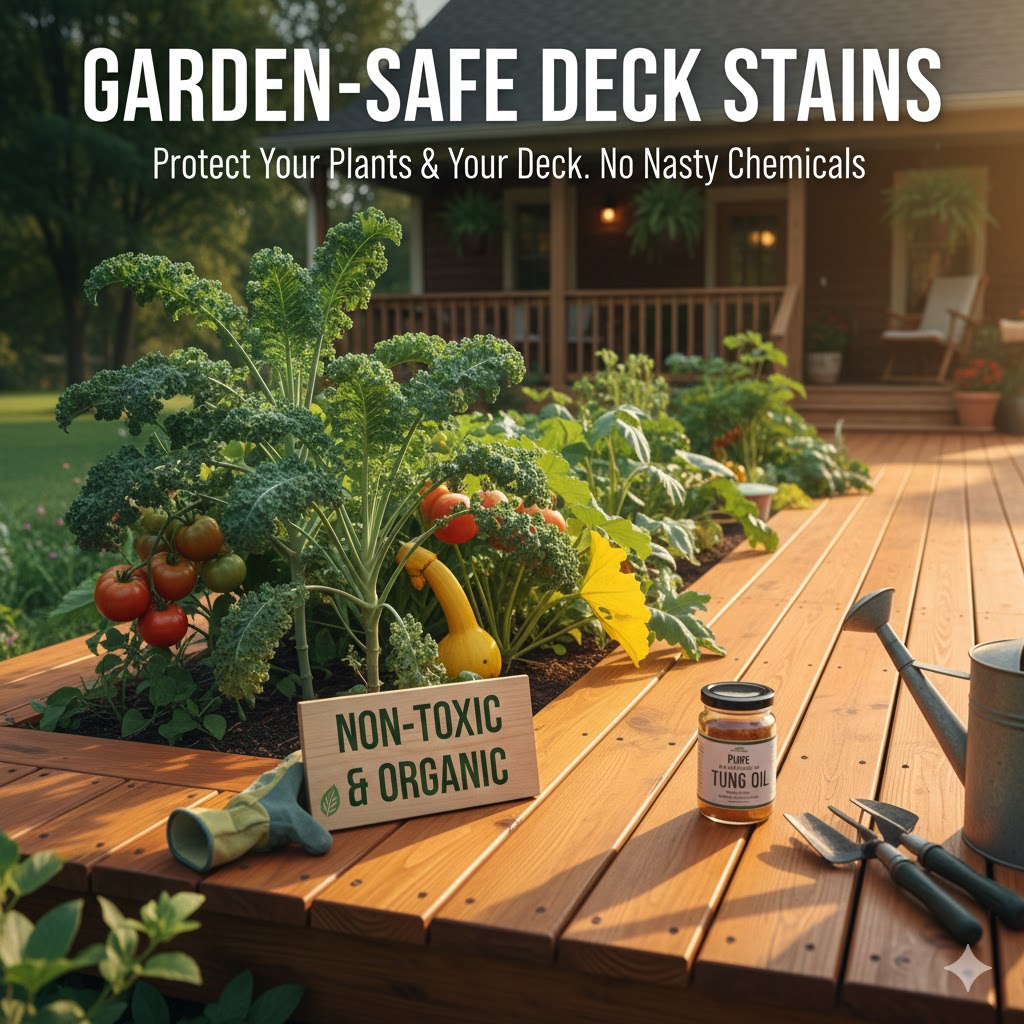
If you’ve spent the spring nurturing heirloom tomatoes and organic kale, the last thing you want is a cocktail of heavy metals and petroleum distillates leaching into your soil. Yet, for many homeowners with raised beds integrated into their decking or container gardens sitting on stained wood, this is a silent, creeping concern.
Traditional deck stains are often a “chemist’s nightmare” of VOCs (Volatile Organic Compounds), biocides, and fungicides designed to kill life—precisely what you don’t want near your food. But your wood still needs protection from the punishing USA sun and rain.
How do you strike a balance? Here is the definitive guide to the best non-toxic deck stains that are 100% safe for vegetable gardens.
The Hidden Danger: Why “Standard” Stain Fails the Garden Test
Most off-the-shelf stains at big-box retailers rely on chromated copper arsenate (CCA)—though mostly phased out—or its modern replacements like ACQ (Alkaline Copper Quaternary). While these prevent rot, they can be phytotoxic. Furthermore, the synthetic solvents (naphtha, mineral spirits) used to keep these stains liquid emit gases that can be absorbed by leafy greens nearby.
When a stain is “non-toxic” in the context of a vegetable garden, it means it is leach-resistant, plant-based, and food-safe once cured.
1. Pure Tung Oil: The Ancient Gold Standard
If you want a finish that is literally edible (though I wouldn’t recommend it for lunch), Pure Tung Oil is the undisputed champion. Pressed from the seeds of the Tung tree, it has been used for centuries to waterproof wooden ships.
- Why it’s garden-safe: It’s a drying oil that creates a hard, matte, water-resistant finish without any synthetic additives. It’s naturally resistant to mold and won’t flake into your soil.
- The Pro Tip: Ensure you buy “Pure” Tung Oil. Many “Tung Oil Finishes” found in stores are actually thinned-down varnishes with high VOC content.
- Best for: Cedar or Redwood decks where you want the natural grain to pop.
2. Vermont Natural Coatings (PolyWhey Series)
This is a fascinating piece of “green” innovation coming out of New England. They use whey protein—a byproduct of the cheese-making industry—as a bonding agent.
- Why it’s garden-safe: It has ultra-low VOC levels (often below 30g/L) and uses the natural strength of protein to create a durable film. It’s a favorite among professional organic farmers for staining the exterior of raised beds.
- Performance: It behaves like a traditional film-forming stain but smells like nothing more than a faint hint of yogurt while drying.
- Best for: High-traffic decks where you need a bit more “scuff resistance” than a simple oil can provide.
3. Real Milk Paint Co. Outdoor Additives
Milk paint isn’t just for furniture. When combined with their outdoor additives (like Citrus Solvent), it creates a breathable, vibrant finish that is entirely biodegradable.
- Why it’s garden-safe: The ingredients are simple: milk protein, lime, and earth pigments. It’s as close to “painting with dirt and milk” as you can get, but with surprisingly professional results.
- The Look: It provides a “distressed” or “old-world” aesthetic that looks incredible next to a lush, green garden.
- Best for: Artistic gardens or rustic-themed outdoor spaces.
4. Eco-Safe Wood Treatment (The “One-and-Done” Solution)
If you hate the idea of re-staining your deck every two years, this is your holy grail. Eco-Safe is a powder you mix with water. It doesn’t “coat” the wood; it initiates a reaction that petrifies the wood fibers.
- Why it’s garden-safe: It is a proprietary blend of natural minerals. It contains no solvents or heavy metals. Once applied, it never leaches.
- The Aesthetic: It gives wood a silvery, weathered “driftwood” look almost immediately.
- Best for: People who prioritize low maintenance and soil health over a “shiny” deck look.
The “Safe Stain” Implementation Guide
Selecting the right product is only half the battle. To ensure your garden stays organic, follow these application rules:
A. The “Drip Zone” Strategy
Even with non-toxic stains, avoid staining while your plants are in the ground if possible. If your garden is already established, use a heavy-duty canvas drop cloth (not plastic, which can cook your plants in the sun) to cover the soil and foliage during application.
B. Avoid “Semi-Transparent” Petroleum Traps
Many stains labeled “eco-friendly” are still water-based acrylics. While better than oil-based, they can still contain microplastics. If your goal is a 100% organic garden, stick to plant-derived oils or mineral-based treatments.
C. Preparation is Key
Do not use bleach or harsh “deck brighteners” to prep the wood near your vegetables. Instead, use a solution of distilled white vinegar and water or a specialized oxygen-bleach (sodium percarbonate) which breaks down into oxygen and soda ash—both of which are much safer for soil microbes.
Comparative Table: Which One for Your Garden?
| Product Type | Durability | Ease of Re-application | Garden Safety Rating |
| Pure Tung Oil | Moderate | Easy (just re-oil) | 10/10 |
| PolyWhey (Whey-based) | High | Moderate | 9/10 |
| Mineral Treatments | Permanent | None needed | 10/10 |
| Bio-based Linseed | Low | Very Easy | 9/10 |
Final Thoughts: Protecting Your Investment and Your Health
A deck in the USA is a major investment, often costing thousands of dollars. It’s tempting to grab the cheapest, toughest chemical sealant to “protect” that investment. But if you are using that space to grow food for your family, the “cost” of those chemicals is far higher than the price of a premium organic stain.
By choosing a whey-based or pure oil finish, you aren’t just protecting the wood; you’re protecting the complex ecosystem of your soil. Your tomatoes will taste better knowing they aren’t drinking naphtha.