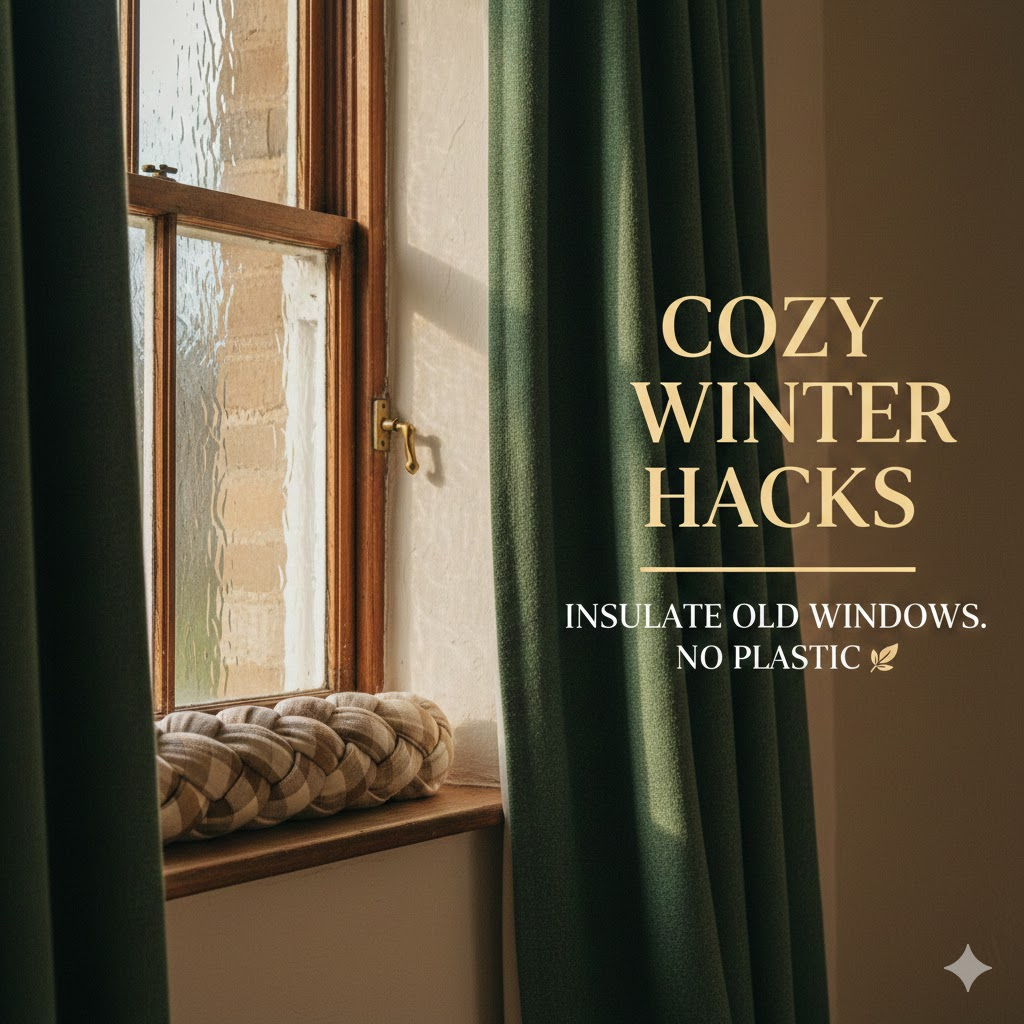
If you live in an older home, you know the “winter dance.” It starts with the first frost: a subtle chill creeps across the floor, and suddenly, you’re losing half your expensive heating through original single-pane windows that have more character than insulation.
For years, the go-to solution has been those ubiquitous plastic window film kits. You know the ones—they smell like a shower curtain, require a hair dryer to install, and leave your windows looking like a construction site. But what if you want to keep your home’s aesthetic intact while being kind to the planet?
Insulating old windows without plastic isn’t just possible; it’s often more effective and significantly more attractive. Here is how to seal those drafts and keep your sanctuary cozy using sustainable, traditional, and high-performance alternatives.
1. The Power of Heavy-Weight Thermal Drapes
In the era before double-pane glass, people relied on “the fabric barrier.” This isn’t just about hanging regular curtains; it’s about thermal mass.
- The Material: Look for drapes made of heavy wool, velvet, or specialized triple-weave thermal fabric. Wool is a natural insulator that breathes while trapping a massive amount of air.
- The Installation: To truly block drafts, your curtains must create a seal. This means hanging them high (above the casing) and wide (extending past the frame).
- Pro Tip: Use “wraparound” curtain rods that allow the fabric to curve back to the wall, touching the plaster. This prevents the “chimney effect” where cold air escapes from the sides of the curtain.
2. Wool Felt Weatherstripping: The Forgotten Hero
Plastic adhesive foam strips degrade in a single season, leaving a sticky mess. Wool felt is the traditional craftsman’s choice. It’s durable, biodegradable, and incredibly effective at filling the gaps in wonky, shifting window sashes.
- How to apply: Nail or staple wool felt strips to the “stop” of the window or the bottom of the sash. Unlike foam, wool compresses and expands naturally as the wood of your window reacts to humidity.
- Why it works: It creates a physical gasket. When you lock the window, the felt creates a tight, fiber-to-wood seal that stops whistling winds dead in their tracks.
3. DIY Organic Draft Stoppers (The “Snake”)
If the primary source of your chill is the window sill, a draft stopper is your best friend. Instead of buying polyester-filled versions, make your own “organic snakes.”
- The Filling: Use dried buckwheat hulls, cherry pits, or clean sand. These materials are dense enough to stay put and heavy enough to block air pressure.
- The Fabric: Use a heavy cotton canvas or leftover upholstery fabric.
- The Benefit: You can customize these to the exact width of your window. They are easy to toss in the wash and store away during the summer.
4. Cellular “Honeycomb” Blinds
If you want a clean, modern look without the plastic film, cellular shades are the gold standard. While some contain synthetic fibers, many high-end brands now offer recycled or natural-blend versions.
The “honeycomb” design creates a series of horizontal air pockets. Since air is a poor conductor of heat, these pockets act as a buffer zone between the freezing glass and your warm living room. According to the Department of Energy, cellular shades can reduce heat loss through windows by up to 40%.
5. Rope Caulk (The Temporary Seal)
For windows you don’t plan on opening until spring, rope caulk is a life-saver. It’s a putty-like material that comes in a roll. It feels like modeling clay and contains no harsh solvents.
You simply press the “rope” into the cracks where the sash meets the frame. It fills the gaps perfectly and, come April, you can simply peel it off. It doesn’t damage the paint, it’s reusable for a couple of seasons, and it’s far less wasteful than rolls of tape.
Why Avoid the Plastic Film?
Aside from the obvious environmental impact (PVC and microplastics), plastic film has a major functional flaw: Internal Condensation.
When you trap a thin layer of air behind plastic, moisture from the room often gets stuck against the cold glass. In old wooden windows, this leads to rot, mold, and peeling paint on the sills. The methods listed above—especially wool and heavy fabrics—allow for a “breathable” insulation that manages moisture much more effectively.
The “Quick Fix” Checklist for a 70°F Interior:
- Lock your windows: It sounds simple, but many old latches don’t pull the sashes together tightly. Adjust your hardware first.
- Clear the Sills: Ensure there is no debris preventing the window from closing flush.
- Layer Up: Combine wool weatherstripping with a heavy curtain. This “double-layer” approach is more effective than any single plastic sheet.
Final Thoughts
Insulating an old home is about working with the house, not against it. By choosing wool, heavy textiles, and mechanical seals, you preserve the beauty of your original windows while significantly lowering your carbon footprint and your heating bill.
You don’t need a hair dryer and a sheet of plastic to stay warm this winter. You just need the right materials and a little bit of old-world wisdom.