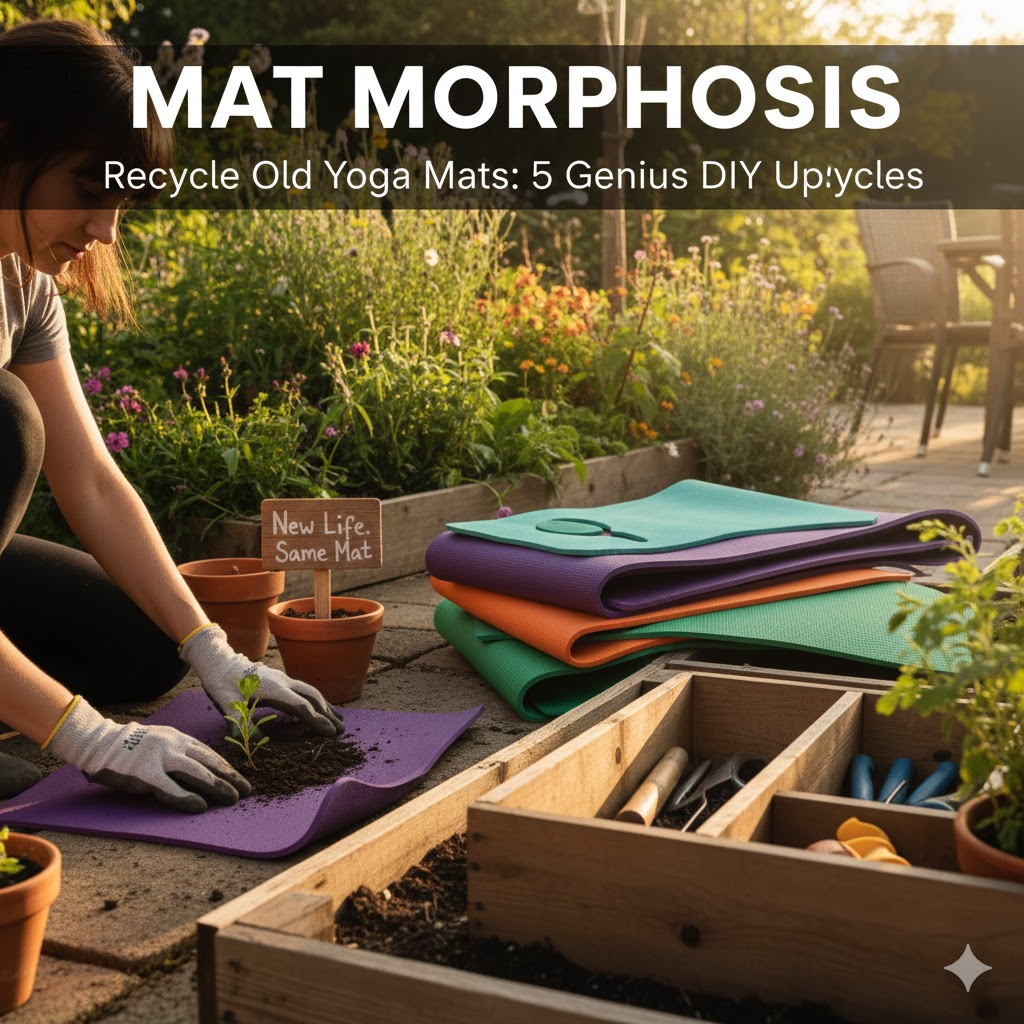
The average dedicated yogi goes through a mat every two to five years. Whether it’s starting to flake, losing its grip, or simply smelling like a decade of hot yoga, that rectangular piece of cushion eventually reaches the end of its life on the studio floor.
But here is the uncomfortable truth: Most yoga mats are an environmental nightmare. Roughly 90% of mats on the market are made of PVC (polyvinyl chloride), a plastic that can take hundreds of years to decompose and leaches toxic phthalates into the soil. Even “eco-friendly” TPE or natural rubber mats don’t just vanish; they require specific conditions to break down.
If you care about your karma, throwing your mat in the trash isn’t an option. Here is the comprehensive guide on how to recycle, upcycle, and responsibly retire your old yoga mat.
1. Identify Your Material: The “How-To” Depends on the “What”
Before you decide how to recycle your mat, you must know what it’s made of. This dictates its potential second life.
- PVC (Polyvinyl Chloride): Sticky, durable, and the most common. It is NOT traditionally recyclable in curbside bins.
- TPE (Thermoplastic Elastomer): A synthetic rubber that is technically recyclable but requires specialized facilities.
- Natural Rubber: Biodegradable in theory, but often mixed with glues.
- Cork or Jute: The most sustainable options, often compostable if separated from the backing.
2. Specialized Recycling Programs (The “Real” Recycling)
Don’t put your mat in your blue bin at home—it will likely be pulled out at the sorting facility and sent to a landfill. Instead, look for these specialized “take-back” streams:
TerraCycle’s Zero Waste Box
TerraCycle is the gold standard for “unrecyclable” items. You can purchase a “Sporting Goods Zero Waste Box.” You fill it with old mats and gear, and they break the polymers down into pellets for industrial manufacturing. This is the only way to ensure PVC truly stays out of the landfill.
Manufacturer Take-Back Schemes
Brands like Manduka have launched the “LiveON” program. When you buy a new mat, they often provide a way to send your old one back to be turned into high-tech flooring or track surfaces. Always check the website of the brand you originally purchased from.
3. The “Second Life” Strategy: Upcycling Projects
If recycling facilities aren’t accessible, the best sustainable path is repurposing. A yoga mat is essentially a high-grip, waterproof, vibration-dampening sheet. Here are five practical ways to use it:
A. The Ultimate Tool-Box Liner
Old PVC mats are indestructible. Cut the mat to fit your garage tool drawers. It prevents your wrenches and screwdrivers from sliding around and protects the metal from scratches and rust.
B. Anti-Fatigue Kitchen Mats
If you have a hard tile floor in your kitchen, your back knows it. Layer two or three pieces of your old mat and glue them together (using a non-toxic adhesive). Place them under a decorative rug at the sink. The extra cushioning provides significant relief for your joints during meal prep.
C. Knee Pads for Gardeners
Gardening is a high-impact hobby for the knees. Fold a mat into thirds and duct-tape the edges to create a portable, waterproof kneeling pad. Unlike store-bought foam pads, these won’t crack after one season in the sun.
D. Sound-Dampening for Appliances
Does your washing machine or old refrigerator vibrate like a jet engine? Cut squares of the mat and place them under the feet of the appliance. The dense foam absorbs the kinetic energy and significantly reduces the decibel level in your home.
E. Car Trunk Protector
Cut the mat to fit the trunk of your car. It’s perfect for the “messy” trips—hauling muddy hiking boots, wet umbrellas, or groceries that might leak. When it gets dirty, just pull it out and hose it down.
4. Community Giving: Thinking Outside the Box
If your mat is still structurally sound but just “ugly,” don’t toss it. There are organizations that thrive on second-hand mats:
- Animal Shelters: This is the best-kept secret in the recycling world. Shelters use old mats to line crates. They provide a soft, non-slip surface for dogs and cats recovering from surgery, and they are much easier to sanitize than blankets.
- Physical Therapy Clinics: Some clinics in low-income areas accept donations for patients who need a non-slip surface to perform their home exercises but can’t afford a new mat.
- Homeless Shelters: A yoga mat provides a crucial moisture barrier between a sleeping bag and the cold ground.
5. How to Clean a Mat Before Recycling/Donating
You shouldn’t pass on a mat that’s a biohazard. Clean it sustainably with this DIY spray:
- Mix 3 parts water with 1 part white vinegar.
- Add 5 drops of tea tree oil (a natural antifungal).
- Scrub with a natural fiber brush and let it dry completely in the sun. The UV rays help kill any remaining bacteria.
6. The Future: Buying Your Last Mat First
To end the cycle of waste, your next purchase should be your most mindful. Look for:
- Closed-loop systems: Brands that take their products back.
- 100% Natural Cork: It is naturally antimicrobial and can be composted at the end of its life.
- Natural Rubber: Look for FSC-certified rubber (Forest Stewardship Council) to ensure no rainforests were cleared for your yoga practice.
Comparative Table: Best Disposal Methods
| Material Type | Best Option | Difficulty | Eco-Impact |
| PVC | TerraCycle / Upcycling | Medium | High (Keeps toxins out of soil) |
| Natural Rubber | Composting (if pure) | Easy | Low (Natural decay) |
| TPE | Manufacturer Take-back | Hard | Medium (Requires tech) |
| Cork | Garden Mulch / Upcycle | Easy | Zero Waste |
Final Thoughts
The philosophy of yoga includes Ahimsa—non-violence or non-harming. This principle should extend beyond our bodies and into the way we treat the objects we use. By taking the time to recycle or upcycle your old yoga mat, you are completing the circle of your practice.
The next time you roll out a new mat, do it with the peace of mind that your old one is busy being a dog bed, a kitchen cushion, or a recycled running track.