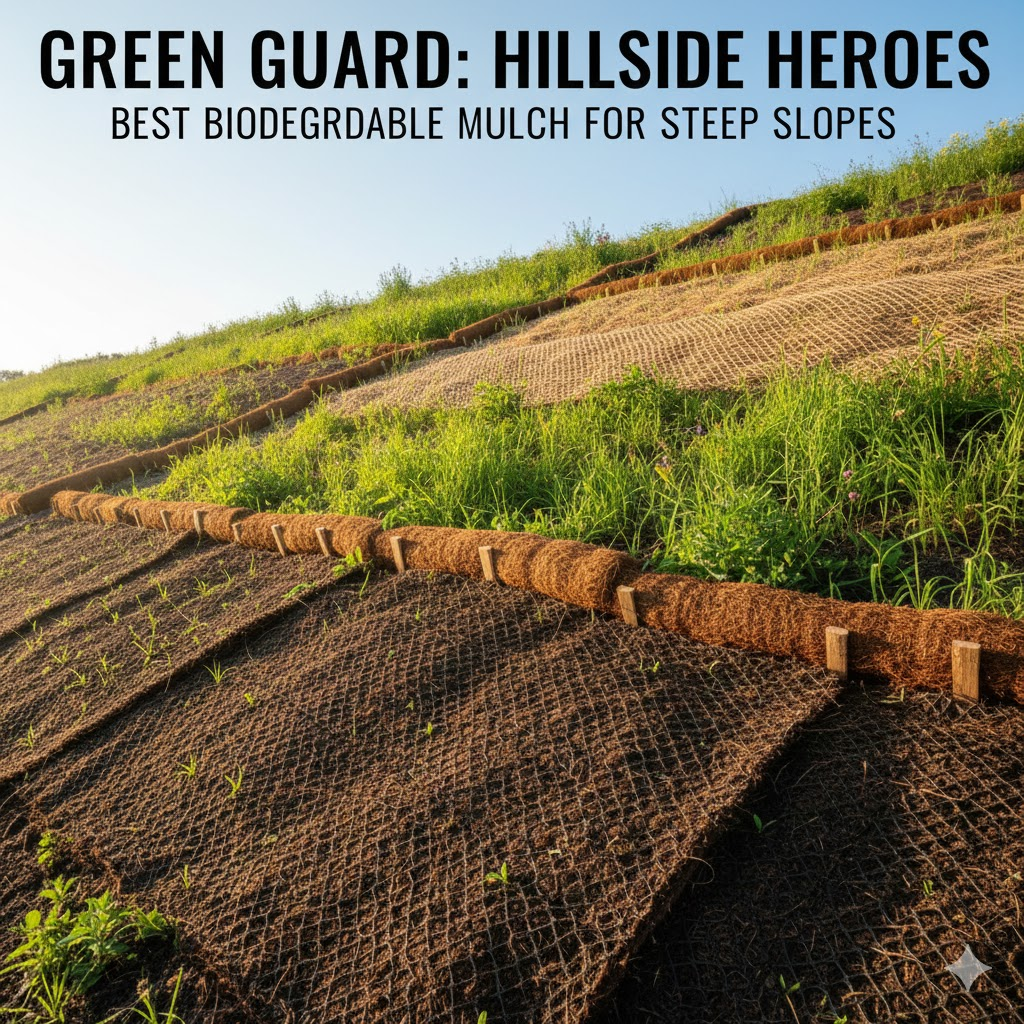
Steep slopes in a landscape are both an aesthetic challenge and an ecological liability. They are prone to severe erosion, making it difficult to establish plant life, washing away precious topsoil, and potentially sending sediment into waterways. While traditional erosion control often involves synthetic geotextiles or wood chips that slide away with the first heavy rain, a more sustainable and effective solution exists: biodegradable mulch.
For homeowners, landscapers, and environmental restoration projects, choosing the right biodegradable mulch for steep slopes isn’t just about stopping soil loss; it’s about building soil health, retaining moisture, suppressing weeds, and creating a stable environment for new plantings—all while being kind to the planet.
Let’s explore the best options that decompose naturally, enriching your slope over time.
The Unique Challenges of Mulching a Steep Slope
Before diving into materials, it’s crucial to understand why standard mulching techniques often fail on inclines:
- Gravity: The relentless pull of gravity means loose materials will simply slide downhill with precipitation or strong winds.
- Water Runoff: Rain gains speed and erosive power on a slope, easily dislodging mulch and carving channels.
- Establishment: New plants struggle to root in unstable, rapidly drying soil.
- Weed Competition: Weeds thrive in disturbed soil, outcompeting desirable plants if not suppressed.
Biodegradable mulches for slopes need to offer more than just coverage; they require interlocking fibers, sufficient weight, or a binding mechanism to stay in place.
1. Coir (Coconut Fiber) Mats & Logs: The Erosion Control Powerhouse
Coir, derived from coconut husks, is arguably the gold standard for biodegradable erosion control on steep slopes. It comes in various forms, each suited for different applications:
- Coir Blankets/Mats: These are woven nets of coir fibers, often backed with a biodegradable netting (jute or polypropylene that degrades quickly).
- Why it’s effective: The woven structure physically holds soil in place. The fibers absorb huge amounts of water (up to 7 times their weight), releasing it slowly, which is critical for plant establishment on dry slopes. As the mat degrades (2-5 years), it adds organic matter to the soil.
- Application: Lay directly onto prepared soil, overlapping edges. Secure with biodegradable pins or staples. Plant directly through the mat openings.
- Coir Logs/Wattles: Tightly packed coir fiber inside a coir or jute netting, resembling a dense sausage.
- Why it’s effective: Placed horizontally along the contour of a slope, these logs act as mini check dams. They slow down water flow, trap sediment, and create terraces where seeds can germinate.
- Application: Dig a small trench to partially embed the log, then stake it firmly with hardwood or metal stakes.
2. Jute Mesh/Netting: The Versatile Weave
Jute is a strong, natural fiber known for its durability and rapid biodegradability.
- Why it’s effective: Jute mesh provides excellent temporary stabilization. Its open weave allows plants to grow through easily, and it slowly decomposes (6-18 months), enriching the soil. It’s lighter than coir but still offers good protection against wind and water erosion.
- Application: Ideal for slopes where vegetation is expected to establish quickly. Roll out the netting, ensuring good soil contact, and secure with biodegradable pins.
3. Straw Wattle/Bales: Economical & Readily Available
Straw (wheat, rice, or barley) is a readily available and cost-effective biodegradable option, especially when used in wattle form.
- Why it’s effective: Straw wattles are similar in function to coir logs, acting as sediment barriers and flow decelerators. They are excellent for short-term erosion control and adding organic matter.
- Application: Like coir logs, embed and stake straw wattles along the contour. For general mulching, apply a thin layer of straw (2-3 inches) and cover with a light, open-weave biodegradable netting (like jute) to hold it in place. Avoid thick layers, as they can become a mat and shed water.
4. Wood Fiber/Hydromulch Blends: The Engineered Solution
For larger, professional-grade projects, wood fiber hydromulch is often sprayed onto slopes. While traditionally containing synthetic binders, eco-friendly versions are now available.
- Why it’s effective: These blends use recycled paper, wood pulp, or even cotton, mixed with water and a natural, biodegradable binder (e.g., guar gum, plant-based starches). When sprayed, they conform to the slope, creating an interlocking mat that stabilizes the soil immediately.
- Application: Requires specialized hydroseeding equipment. Best for large, difficult-to-access slopes where hand application is impractical. Ensure the blend specifies a biodegradable binder.
Key Considerations for Success on Slopes
- Soil Preparation: Loosen compacted soil to allow water infiltration. Incorporate compost to improve structure.
- Terracing/Contouring: For very steep slopes, small terraces or contouring can significantly reduce water velocity.
- Planting Strategy: Always pair biodegradable mulch with deep-rooted plants. Grasses, native shrubs, and groundcovers are your long-term erosion solution. Plant through the mulch or mat.
- Securing the Mulch: Use plenty of biodegradable landscape staples/pins. For blankets, overlap edges generously.
- Watering: Even with moisture-retentive mulches, new plantings on slopes will need consistent watering until established.
Comparing the Top Biodegradable Options:
| Material | Primary Advantage | Degrades In | Cost | Best Use Case |
| Coir Blankets | Excellent stabilization, water retention | 2-5 years | Higher | High erosion risk, long-term plant establishment |
| Coir Logs | Sediment trapping, terracing | 2-5 years | Medium-High | Base of slopes, contour lines, severe gully control |
| Jute Mesh | Good temporary stabilization, light | 6-18 months | Medium | Moderate slopes, quick plant establishment |
| Straw Wattles | Economical, sediment trapping | 6-18 months | Lower | Temporary control, accessible slopes |
| Eco-Hydromulch | Large-scale, immediate bond | 6-12 months | Professional | Extensive slopes, difficult access |
The “Why Biodegradable?” Imperative
Choosing biodegradable mulch over synthetic options is not just an aesthetic choice; it’s an ecological imperative:
- Soil Health: As it breaks down, it enriches the soil with organic matter, improving structure, water retention, and microbial life. Synthetic mulches do none of this.
- Waste Reduction: No need to remove and dispose of non-degradable materials once vegetation is established.
- Microplastic Avoidance: Synthetic nets can break down into microplastics that pollute soil and water. Biodegradable alternatives eliminate this risk.
- Wildlife Safe: Less risk of wildlife entanglement compared to persistent synthetic netting.
Final Word: A Slope Transformed
Transforming a bare, eroding slope into a lush, stable ecosystem is one of the most rewarding landscape projects. By carefully selecting biodegradable mulches like coir, jute, or straw wattles, you’re not just preventing problems; you’re actively healing the land. These materials provide the critical temporary support needed for plants to take root, creating a long-term, self-sustaining solution that works with nature, not against it. It’s a testament to the power of thoughtful, sustainable design, turning an unstable eyesore into a vibrant, resilient part of your property.