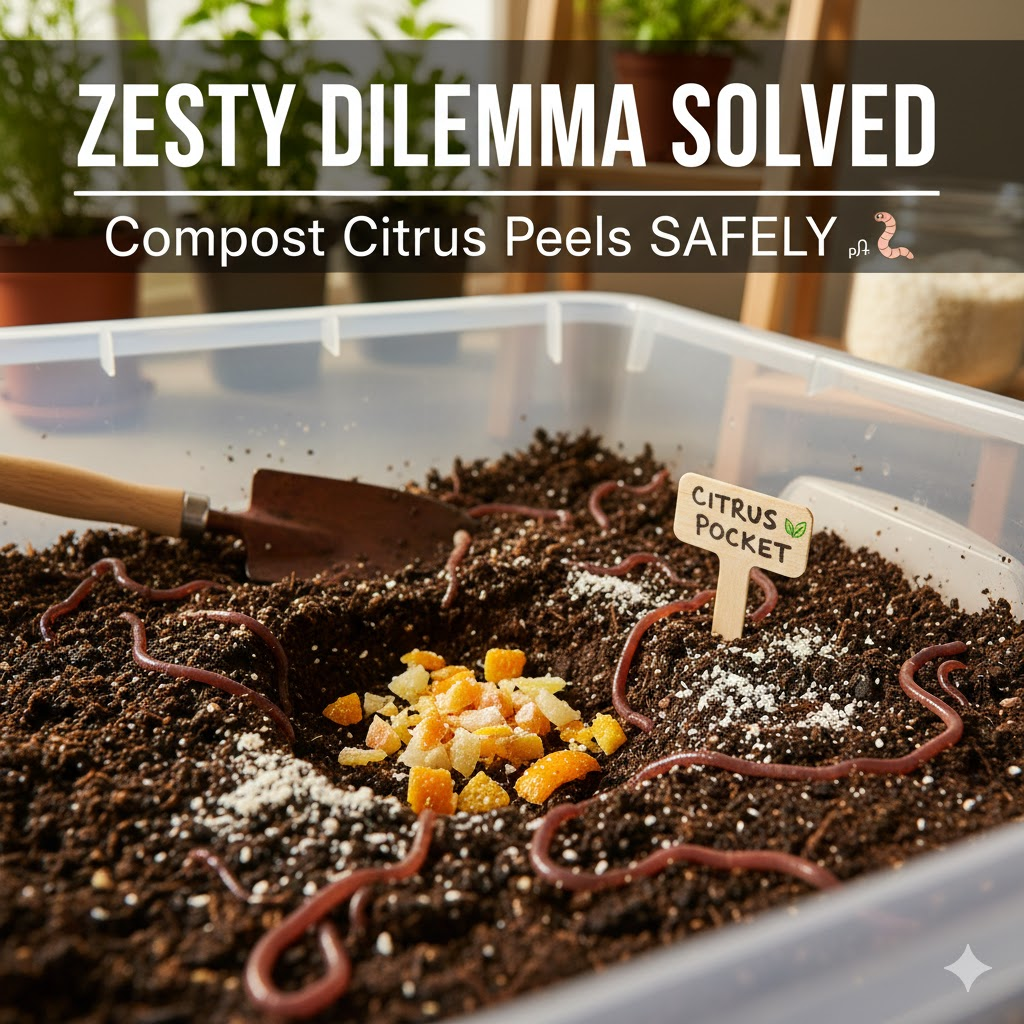
For the enthusiastic home composter, a worm farm (or vermicomposter) is a living, breathing ecosystem designed to turn kitchen scraps into “black gold”—nutrient-rich worm castings that make gardens thrive. But then, you peel an orange. Or juice a lemon. And a familiar question pops up: “Can I put citrus in my worm farm?”
It’s one of the most debated topics in vermicomposting. Traditional advice often says: “Absolutely not! Citrus is toxic to worms!” While there’s a kernel of truth to that, it’s an oversimplification. With the right techniques and a bit of patience, those zesty peels can indeed become a valuable addition to your worm farm, providing diverse nutrients and preventing waste.
Let’s dive into the safe, effective methods for composting citrus in your worm farm without harming your precious wrigglers.
The “Why Not?” Debate: Understanding the Citrus Challenge
The primary concerns with adding citrus to a worm farm stem from two main components:
- Acidity (pH): Citrus fruits are acidic. Worms, particularly common composting worms like Red Wigglers (Eisenia fetida) and European Nightcrawlers (Lumbricus rubellus), prefer a neutral pH environment (around 6.0-7.0). A sudden drop in pH can cause “acidic conditions” where worms become sluggish, try to escape, or even die.
- Limonene & Essential Oils: The aromatic compounds in citrus peels, particularly limonene, act as natural insecticides. In concentrated amounts, these can irritate or even repel worms, impacting their feeding and reproduction.
However, these issues are primarily a concern with large quantities of fresh citrus. With proper preparation and moderation, your worm farm can handle it.
Phase 1: Pre-Treatment is Key – Breaking Down the Barriers
Before citrus peels even touch your worm bin, a little pre-treatment goes a long way. This significantly reduces acidity and breaks down those potent essential oils.
Method 1: The Freezer Flash (Best for Small Batches)
- Collect & Chop: Collect your citrus peels. Chop them into small pieces (½ inch or smaller). The more surface area, the faster they break down.
- Freeze: Place the chopped peels in a freezer bag and freeze them for at least 24-48 hours.
- Thaw & Release: When ready to add, thaw the peels. Freezing and thawing break down the cellular structure, making the peels softer and releasing some of the essential oils and acids, which can then drain away.
Method 2: The Pre-Compost Pile (Ideal for Larger Quantities)
- Chop: Again, chop peels finely.
- Hot Compost First: If you have a traditional hot compost pile, add your citrus peels there for a few weeks. The high temperatures and diverse microbial activity will rapidly break down the acids and limonene.
- Transfer: Once the peels are well on their way to decomposition (darker, softer, less aromatic), they are much safer to introduce to your worm farm.
Method 3: Soaking & Rinsing (Quick De-Acidification)
- Chop: Chop peels into small pieces.
- Soak: Place them in a bowl of water for 24 hours. The water will help leach out some of the initial acidity.
- Rinse: Drain the water and give them a quick rinse before adding.
Phase 2: Introducing Citrus to the Worm Farm – Moderation & Observation
Once your citrus peels are pre-treated, it’s time to introduce them carefully.
Rule 1: Small Amounts, Infrequently
- Start Slow: Begin with a very small amount—a handful of pre-treated, chopped peels for an average 3-tray worm farm.
- Frequency: Wait at least 2-3 weeks between adding citrus. This allows the worms and microbes to process the previous batch and for the bin’s pH to stabilize.
- Total Percentage: Citrus should never make up more than 5-10% of your total worm food input. Think of it as an occasional treat, not a main course.
Rule 2: Bury It Deep & Away From Worms
- Create Pockets: Don’t just dump citrus on top. Dig a small hole or create a “feeding pocket” in one corner of your bin.
- Cover It: Place the pre-treated citrus in the pocket and cover it thoroughly with bedding material (shredded newspaper, cardboard) and some existing finished compost. This creates a buffer zone, allows microbes to start working, and prevents fruit flies.
Rule 3: Balance with “Browns” and Buffer Agents
- Carbon-Rich Materials (“Browns”): When adding citrus, always add extra “brown” materials like shredded cardboard, newspaper, or dry leaves. These are high in carbon, which helps balance the nitrogen from the food scraps and also helps buffer pH.
- Crushed Eggshells/Agricultural Lime: These are your best friends when adding anything acidic.
- Crushed Eggshells: Collect, rinse, dry, and crush eggshells into a fine powder. Sprinkle a tablespoon over the citrus when you add it. Eggshells provide calcium carbonate, a natural pH buffer that slowly releases as it breaks down.
- Agricultural Lime (Calcium Carbonate): A small pinch (¼ teaspoon) of agricultural lime (not quicklime!) can also help. Use sparingly, as too much can raise pH too high.
Rule 4: Observe Your Worms and Your Bin
- Worm Behavior: After adding citrus, check your bin every few days. Are worms still active and burrowing? Or are they trying to escape (clustering on the sides, lid, or in the bottom tray)? Escaping worms are a clear sign of an unhappy environment, likely due to pH.
- Smell: A healthy worm bin should smell earthy. A sour, putrid, or strong ammonia smell indicates anaerobic conditions or too much acidic material.
- Monitor pH: If you’re serious, a simple pH testing kit (like those for gardening) can give you peace of mind.
When to Absolutely AVOID Citrus in Your Worm Farm:
- New or Struggling Bins: If your worm farm is new (less than 3 months old) or if your worms are already looking sluggish/unhealthy, avoid citrus entirely. Let the ecosystem establish first.
- Pest Infestations: If you have an existing fruit fly or mold problem, citrus can exacerbate it.
- Large Quantities of Fresh Peels: Never, ever dump a whole bag of fresh orange peels directly into your bin. This is a guaranteed worm repellent.
The Zesty Payoff: Benefits of Citrus in Moderation
When done correctly, small amounts of composted citrus can offer:
- Nutrient Diversity: A broader range of micronutrients for your worm castings.
- Waste Diversion: Keeps more organic matter out of landfills.
- Pest Control (Controlled): The residual limonene can gently deter some common worm bin pests like mites, but only when carefully integrated.
Final Word: Trust Your Worms
Ultimately, your worms are the best indicators of your bin’s health. By pre-treating citrus, adding it in moderation, balancing it with browns and buffers, and keenly observing your wrigglers, you can safely transform those once-problematic peels into valuable nourishment for your garden. It’s a rewarding challenge that pushes the boundaries of your vermicomposting skills, turning a potential hazard into a sustainable win.